

Can You Get Charged With DUI While Parked In Manassas VA?
Can You Get Charged With DUI While Parked In Manassas VA?
TL;DR
Yes, you can get a DUI while parked in Manassas, VA because the law prohibits driving or operating while impaired. Under Virginia cases like Nelson and Enriquez, “operating” can include being behind the wheel with the key in the ignition or using accessory systems, even if the car never moves. Sarafin confirms that DUI is not limited to public roads in the way many people assume. In a parked-car case, the outcome often turns on details like where you were sitting, where the keys were, whether the engine or electronics were on, and what was said on camera.
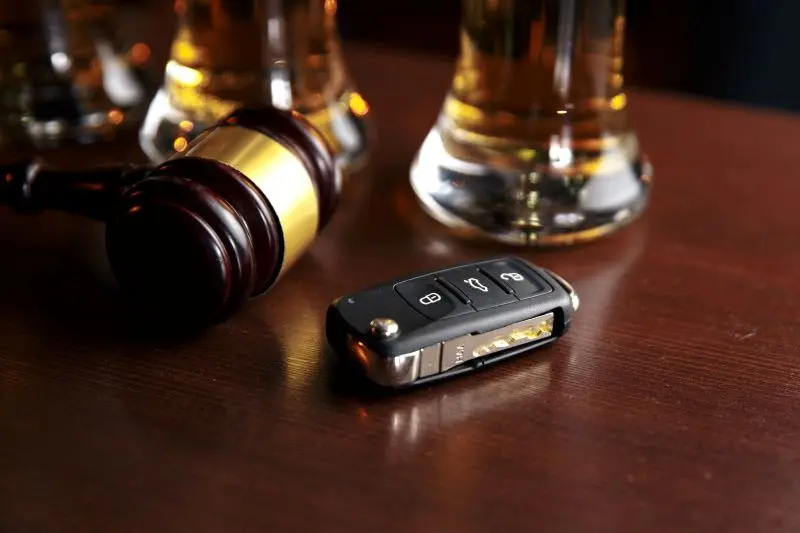
Can You Get A DUI While Parked In Manassas? Va. Code § 18.2-266 Today?
Virginia’s DUI statute makes it unlawful to drive or operate a motor vehicle while impaired (or with a 0.08 BAC shown by a qualifying chemical test). The word “operate” is the reason parked-car DUIs happen. Movement is not required by the statute’s plain language.
This is where many people feel blindsided: “I wasn’t driving” can be true, and you can still face a DUI charge if the officer and prosecutor believe you were operating (meaning you had the vehicle in a condition where it could be set in motion, or you engaged the vehicle’s systems in a way Virginia courts treat as operation).
If you want to see the exact wording for yourself, read the Virginia DUI statute and keep it handy while you review your police paperwork.
What Does “Operate” Mean For Virginia DUI When Car Is Parked, Exactly?
Virginia appellate courts have treated “operate” broadly in DUI cases, especially when the person is in the driver’s seat with access to the ignition and controls. Courts often focus on actual physical control and whether the defendant engaged the vehicle’s systems in a way that can lead to movement.
Three Virginia Supreme Court decisions show how this plays out:
- Nelson v. Commonwealth (2011): The Court affirmed a DUI where the driver was found in a parked vehicle with the key in the ignition in the “on/accessory” position and the radio playing, even though the engine was not running.
- Enriquez v. Commonwealth (2012): The Court emphasized actual physical control and held that a person seated behind the wheel with the key in the ignition can be “operating,” and the exact key position is not necessarily decisive.
- Sarafin v. Commonwealth (2014): The Court held that Code § 18.2-266 has no “on a highway” requirement for motor vehicles, so operation on private property can still support a conviction depending on the facts.
That’s the legal backbone. Now let’s turn it into the real-world “what matters” checklist people actually need.
Is Accessory Mode, Heat, Or Music Enough To Count As Operating, In VA?
It can be. In Nelson, the ignition/accessory details were central to the operating analysis even though the car was not moving. Accessory mode, electronics on, or a “ready” status can be used by the Commonwealth to argue you were engaging the vehicle’s systems in sequence toward putting it in motion.
If your car has push-button start, this often shows up as:
- The dash illuminated,
- The car in accessory/ready mode,
- HVAC or audio running,
- The key fob inside the cabin.
None of these facts automatically equal guilt, but they can become the building blocks of the prosecution’s “operating” argument.
If Keys Are In Your Pocket, Can Police Still Claim You Operated In VA?
Sometimes. Key location is powerful evidence, but it is not the only factor. Prosecutors may still argue “actual physical control” if you were behind the wheel and the key was readily available, especially if the vehicle appeared capable of being driven right away.
From a defense perspective, key questions usually include:
- Were you in the driver’s seat or elsewhere?
- Were the keys in the ignition, in your hand, in the console, or stored away?
- Did the officer observe any engine/electronics status indicators?
- Did you say anything about driving there or planning to drive?
Those details often matter more than the label “parked.”
Is Sitting In Driver’s Seat Enough For A Parked-Car DUI Charge, In VA?
It can be enough, depending on the surrounding facts. Virginia cases repeatedly come back to control. If you are seated behind the wheel with immediate access to start and control the vehicle, courts may treat that as operation.
Here are common scenarios we see in parked-car investigations, and why they trigger DUI charges:
- “I pulled over to sleep it off.” If you’re in the driver’s seat, with keys accessible, and the car is in a condition to be driven, the officer may treat that as operation.
- “I needed heat/AC.” A running engine or active vehicle systems can make the “operating” argument easier for the Commonwealth.
- “I was waiting for a ride.” This can be a strong fact pattern for the defense, but what you said, where you sat, and where the keys were still matter.
A helpful definition in plain English: probable cause is the amount of evidence an officer needs to reasonably believe a crime occurred. It’s a lower standard than “beyond a reasonable doubt,” and it drives whether an arrest happens in the first place.
Does Moving To The Back Seat Avoid A Parked-Car DUI Charge In VA Yet?
It may help, but it is not a guaranteed shield. Moving away from the driver’s seat, keeping the vehicle off, and distancing yourself from the ignition can all support the argument that you were not in actual physical control. But prosecutors still look at the totality of circumstances, including whether you could quickly regain control.
If you are reading this after an arrest, don’t assume a single fact (back seat, engine off, keys not in ignition) “wins” the case. Parked-car DUIs are detail-driven.
Do Keys Or Fobs Make You “Operating” While Parked In Virginia, Legally?
Keys and fobs are often the center of the case because they connect directly to control. Virginia courts have repeatedly treated keys in the ignition plus driver’s-seat positioning as strong evidence of operation.
When we evaluate a parked-car DUI, we usually break “key evidence” into three buckets:
- Access: Could you start the car immediately (fob in cabin, key in hand, key in ignition)?
- Activation: Were the engine or systems activated (accessory, dash lit, HVAC on)?
- Narrative: Did anything on video or in your statements suggest you drove there, were about to drive, or had been driving recently?
Does Parking Location Matter For A Parked-Car DUI In Virginia, Legally?
Many people assume DUI only applies “on the road.” Virginia law does not work that way for the underlying DUI charge. In Sarafin, the Supreme Court said the statute has no “on a highway” requirement for motor vehicles, so private-property operation can still fall within § 18.2-266.
That said, location can matter for other issues, including how the officer made contact, whether the officer had a lawful reason to investigate, and how implied-consent rules apply.
Can DUI Apply If You’re Parked In A Driveway Or Private Lot In Virginia?
Yes, it can. The Sarafin decision is the one people often miss: being in a driveway or private lot does not automatically take you out of DUI territory if the Commonwealth can prove “operation.”
Separately, “highway” is defined broadly in Virginia’s motor vehicle code, including public ways open to vehicular travel (and some designated private ways for law-enforcement purposes).
What Should You Do If Police Knock On Your Window While You’re Parked?
If this happens, your goal is to stay safe and avoid creating new problems while protecting your rights.
- Stay calm and keep your hands visible.
- Do not start the car or try to drive away. Leaving can turn a parked contact into a moving driving allegation.
- Provide identification if requested.
- Be careful with statements. You can politely say, “I prefer not to answer questions.” Your words can become evidence about drinking, timing, or whether you drove.
- Do not argue the law roadside. Save the legal fight for court.
- If you are arrested, ask for counsel and stop discussing facts.
A quick process note: most DUI cases (as Class 1 misdemeanors) are handled in General District Court, which hears misdemeanors and traffic cases.
Should You Roll Down The Window, Step Out, Or Show Keys To Police Now?
Follow the officer’s lawful safety instructions, but remember you can keep your conversation minimal. If asked to step out, do so calmly. If asked investigatory questions (how much you drank, where you were headed), you can decline to answer. If you are unsure whether something is a command or a request, it is okay to ask, “Am I required to do that?”
The most common “damage” we see in parked-car DUIs is not the parking itself. It’s the combination of:
- Trying to explain too much,
- Admitting to driving,
- And unintentionally confirming key/ignition details.
Do You Have To Do Field Sobriety Tests Or Blow Into A PBT In Virginia?
In many situations, field sobriety tests are voluntary. Officers use them to decide whether they believe they have probable cause for arrest.
Virginia also has a preliminary breath test statute, Va. Code § 18.2-267, which describes the roadside breath analysis as a preliminary tool tied to probable alcohol content and probable-cause decisions.
After arrest, a different set of rules applies. Virginia’s implied-consent law states that anyone who operates a motor vehicle upon a highway is deemed to have consented to post-arrest breath and/or blood testing if arrested within three hours of the alleged offense.
Refusal can carry separate consequences under Va. Code § 18.2-268.3, including civil penalties, license consequences, and in some circumstances criminal exposure for repeat refusal situations.
What Penalties Follow A Parked-Car DUI Conviction In Virginia, Exactly?
A parked-car DUI conviction is still a DUI conviction. Under Va. Code § 18.2-270, a violation of § 18.2-266 is generally a Class 1 misdemeanor with a mandatory minimum fine of $250, and enhanced mandatory minimum jail time can apply based on BAC tiers and prior offenses.
Virginia’s general misdemeanor punishment statute explains that a Class 1 misdemeanor can carry up to 12 months in jail and up to a $2,500 fine.
License consequences are also a major part of the fallout. For a first offense under § 18.2-266, Va. Code § 18.2-271 provides for a one-year loss of driving privilege from the date of judgment (with longer periods for subsequent offenses).
Realistically, what most people feel immediately is the disruption: court dates, license issues, and the stress of not knowing what evidence matters. In parked-car DUIs, that evidence often includes body-worn camera footage, the officer’s description of the ignition and key position, and any “I drove here” statements.
Parked-Car DUI In Virginia? Get A Clear Plan With The Irving Law Firm
If you were accused of DUI while parked, it’s understandable to feel confused or frustrated. These cases often hinge on small details like where you were sitting, what the dash showed, where the keys were, and what was captured on camera. Schedule A Confidential Evaluation with The Irving Law Firm to review the allegations, the “operating” evidence, any testing issues, and the court process in your specific Virginia jurisdiction. We’ll explain what the Commonwealth must prove, what defenses may fit your facts, and what you can do now to protect your license and your record.
About the Author: The Irving Law Firm - John J. Irving